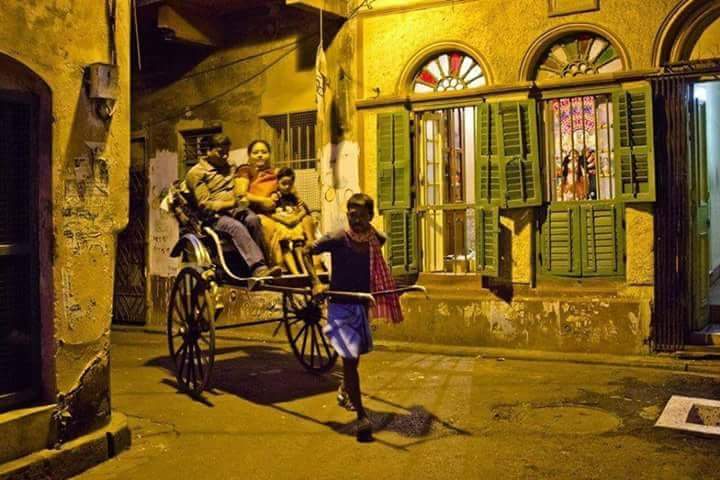
The flavour of Kolkata

The flavour of Kolkata
The city is known for its old alleys. One such is shot by Atanu Pal.

Saturday, June 13, 2015

The Kolkata Street Food Festival at Park Plaza, 29th May-14th June

The city loves its street food. So when a hotel wishes to pay a tribute to that love by organizing a festival it evokes interest. Being a discerning consumer and proponent of street food, it did the same to me when the management of Park Plaza hotel invited me to a preview of their ‘The Kolkata Street Food Festival’ at K19, the all day dining restaurant. I couldn't make it then, so I decided to check it out later on with two blogger friends (make that three as it includes a blogger couple). That’s why it is coming up late in the day on this blog.

An honest view first- It’s not easy to organize a street food festival in a manner that satisfies the guests who are well-exposed to street food. There are places across the city known for the best in each food- like the best Doi Phuchka, the best rolls, the best Fish Fry and so on. Selecting which foods to feature, making them in a way that they retain their well-known taste (or comes reasonably close to it) and serving them in the right fashion is quite a challenge.

I turned up late in the evening and saw Indrajit of A Bong Petuk’sDiary and Anindya-Madhushree of Pikturenama waiting for me and having a hearty chat over tea. K19 is a goodlooking restaurant which has a large space with neatly spread out tables. One side is the open kitchen and buffet table in front of it. Some counters (like dessert) are at the centre. I noticed that live counters have been set up to make various items right in front of the guest and customize them to his/ her taste.

We were served Fish Kobiraji, followed by Moglai Parota (Paratha). The Kobiraji was right at the crust, but the core was a put-off as, leave alone a fillet, the fish had to be fished out at times. The Moglai also failed in the filling, but a little surprisingly the accompanying dry potato curry was perfect.

Moglai Parota and Fish Kobiraji 

Telebhaja followed- Beguni, Aloor Chop and Phuluri. The Beguni wasn’t bad, but I wished the slice of the eggplant was thicker. I do not like Phuluri, so gave it a miss. Jhalmuri was being made in a counter with most of the usual ingredients.

Telebhaja platter

Live Telebhaja counter

Jhalmuri counter

We decided to move on to the phuchka counter. It was a large counter serving a wide range- phuchka, alur dom, palang pakora, dahi vada, raj kachori and a lot more. Madhushree found out one item called fried idli. I haven’t heard of anything like this available on the streets. She tried the palang pakora which was made chaat style. I took a bite of it and liked it. Though I see palang pakora fried at telebhaja stalls on the streets and served with just a sprinkling of rock salt, this palang pakora chaat was new. I didn’t feel like having phuchka as even a few of it can fill one up and I had a lot of other things to explore. So I asked the guy at the counter whether he could make me churmur but he asked me back what it was. Disappointed, I asked for dahi vada. He again made it chaat style, with tiny pieces of raw onion and tomato and garnished with coriander leaves. I haven’t ever seen davi vada made that way, but I must say I loved the tangy-sweet taste. Indrajit took the raj kachori, and though the size was that of a baby kachori, it wasn’t bad. The chutneys could be used a little more generously but.


Palang Pakora

Davi Vada chaat style

Phuchka and chaat counter

At this juncture the F&B Manager Mr Anukam Tiwary met us and told us about the festival and guided us to the main course (of the festival). There is no dinner buffet as such, but one can have the chaats at the phuchka-chaat counter separately, at Rs 325 (plus taxes). Rest of the long range of items of The Kolkata Street Food Festival is part of their regular dinner buffet which is priced hat 1250 plus taxes.  However if one wishes, he/ she can take the festival items a la carte as well.  About merging it with the dinner buffet, it does offer the diner a much wider array of choices in starters during the time of the festival, but my opinion would be to keep a separate buffet of the festival dishes, otherwise the idea of a festival gets diluted.

We moved on to the main course.  There were mutton stew, hakka chowmein and rolls among others. I, Anindya and Indrajit ordered chicken roll. Meanwhile I sampled the mutton stew a bit. The mutton was stiff and the gravy didn’t taste like stew. The rolls arrived. The filling was decent, but the paratha was dry, as it was deliberately cooked with less oil probably to give the guests a healthier option. So I wondered “Is it diet roll?”. My take- When you are making chicken roll street style, make it the way they do it on the streets. Of course healthiness is a factor and to take care of that, fry the paratha using the right amount of oil, instead of vanaspati which is widely used on the street and is unhealthy (also makes the roll sticky if used generously).

Mutton Stew

Chicken Roll

We decided to give a last try to one dish- paw bhaji and ordered it. There was a paw bhaji counter set up in the open kitchen. It arrived and Indrajit tried it first. He missed the absence of a dollop of butter between the paws and I agreed. Though it is not common, many places known for good paw bhaji put it in the dish. As it is a premium restaurant, it could be expected that street food would be prepared with all the indulgence as seen in the best of the places on the streets.  He tried the bhaji and didn’t look happy. I and Anindya took half a teaspoonful each. It tasted more sweet and far less spicy. The spices seemed to have been burnt. We gave a feedback to a chef and she happily noted it and thanked us for sharing the same. On her recommendation we took the dessert- plain vanilla ice cream topped with choco chips. All of us liked it and our dinner ended on a relatively happy note.

Paw Bhaji

Bloggers (L to R) Madhushree, Indrajit and Anindya

The Kolkata Street Food Festival
29th May to 14th June
7 pm onwards


K19
Park Plaza Kolkata Ballygunge
17 Garcha First Lane (adjacent to Pantaloons Gariahat, a few metres ahead of Mirch Masala)
Kolkata 700019
 Tel: 033 4040 9999
Mob: 84200 33700

Toll free phone no: 1800 1800 333


If you liked reading the post, you may visit this blog's Facebook page (click on the link) and hit the 'Like' button to stay connected with the future updates on this blog and more on the page.

Sunday, June 07, 2015

Street-side sweets of Kolkata

The street food of Kolkata is well cultivated, but the street version of sweets is surprisingly the poor cousin. The sweets sold on the streets of Kolkata not only offers a wide range to please customers with varied tastes (like those who have a sweet tooth and those who don’t, like me, but have a sweet craving sometimes), and have a value-for-money pricing, they can give many sweet shops (including popular ones) a run for money in terms of quality vs price. One point- the prices are not cheap at all, unlike street food, but completely justify the quality. The stalls are generally seen in office areas as sweets post meal are favoured by foodie officegoers. Typically sweets are laid out in aluminium trays covered with glass sheets.

The sweets are sourced from many places- all outside Kolkata as far as I know. The vendor I prefer to go to, to satisfy my post-lunch sweet craving at times, sources from Howrah, and partly from Chandannagar. There are sellers who get the stuff from Katwa and other places in Bardhaman district.

This vendor’s stall is at this tiny patch called LIC Gully- basically the connector between CR Avenue at Chandni Chowk metro station to Madan Street, along the Hindustan Buildings (starting from its one end and ending at the other). The old, toothless man in shirt & trousers sets up the stall everyday (except Sunday) opposite the post office entrance at Hindustan Buildings. He keeps a no. of bhaja mishti (fried sweets) like golap jaam (gulab jamoon), chhanar jilipi, pantua, kalo jaam, lyangcha; a no. of sandesh, both kawda paak and nawrom paak (hard and soft versions respectively) and a no. of rosher mishti (syrupy chhena-based sweets)  which prominently includes cream-based sweets- my favourite category. I like the sweetness mellowed my sweets. 

The golap jaam he sells is top class, biggish and comes at Rs 10 (it used to be Rs 8 not so long ago). It looks the perfect shade of golden brown and has the right mix of sooji and maida (flour) with the cardamom at the core (essential in a good golap jaam), which is rarely seen in many well-known shops. I bet the quality matches that of any popular shop selling quality gulab jamun, say the Ganguram’s across the road. He brings a sweet from Chandannagar called Rasomadhuri (a cream-based sweet), which I can put in one word- sublime! I hardly get to taste it as it is exhausted before 4 pm and I mostly come at that time. When I asked about it in recent past, he said with deep empathy “You come so late…..it doesn’t stay long in the tray”. Rasomadhuri happens to be one gem from Chandannagar which is famous for its sweets. The stall is wrapped up by 5 o’ clock. He has customers from officegoers who have at least three-four varieties everyday. I also love the chhana bhaja, kalo jaam and chhanar jilipi.

If I’m too late, I have another place to go. It’s on Ganesh Chandra Avenue, which can be easily called the food street. It’s just before Lalani’s IT World, between CR Avenue and Bentinck Street, at the left (towards Bentinck St). This vendor with a glass box keeps a good variety as well, except cream-based sweets. But once in a blue moon he offers a yummy rasomalai served cold (adding to the taste).


Few days back boss treated me with sweets from roadside as we felt a wee bit hungry after visiting a prospect at central business district. This stall was at Lyons Range sells a mind-boggling range. I sampled a chhanar cake followed by a cream-based sweet. Both were good, but the former was class apart with its artistic play with a thin layer of cream inside.

The stall at Lyons Range. Photograph by Suvendra Mukherjee.

I have been eyeing one such stall at Sealdah, a little before Loreto Day School (set up at the entrance of a building), approaching from Moulali, for a long time. The fare is slurp-inducing. Have not had an opportunity to visit it at the right time. 


If you liked reading the post, you may visit this blog's Facebook page (click on the link) and hit the 'Like' button to stay connected with the future updates on this blog and more on the page.

Thursday, June 04, 2015

Uttam Bhoj at ITC Sonar

Coming back to eating in this terrible weather. As the appetite has gone for a complete toss, one feels like having something that’s not only not heavy for the digestive system, but also lets you feel good even after the meal.

So while I was invited by ITC Sonar to the bloggers’ review of Uttam Bhoj, a vegetarian meal- creation of chef Gunjan Goela, which is an excellent combination of rajasic food and sattvic food which assures complete gratification after the meal, I was happy.

Rajasic foods are known to excite the senses. They are considered to be neither beneficial nor harmful to the system. In contrast sattvic food is known for healing the senses. It is supposed to have a calming effect on the mind and regarded pure, essential, natural, energy-containing, clean, honest and wise.

A bit on the chef. Gunjan is, for a change, known as a philosopher chef. And literally so, as she holds a degree in philosophy. This lady is a consultant with ITC Hotels for Indian-Marwari cuisine. It is said that it takes more than mere ingredients and technique to cook a good meal, and  a good cook puts something of himself (or herself) into the preparation. Gunjan personifies this belief with her penchant for adding a cultural flourish to her cooking. And I witnessed this in the interaction with her. The Uttam Bhoj, designed by her, comprises of foods from the kitchens of Delhi's erstwhile nobility.

Chef Gunjan Goela

As I reached late for the lunch, I saw a group of bloggers in thick of conversation with the chef. The first few items were already served. So they were repeated for me- ghughni and aloo chaat. The ghughni made the perfect start for me as I found it to be tasting exactly the same that my grandaunt would make me at home, devoid of onion and garlic, as she didn’t like the one made by the cook who used the said ingredients. It was just rightly spiced (with cumin in it), though far from as spicy and hot as the roadside version. It would have tasted equally good even without the raw onion sprinkled on it before serving. The aloo chaat was a combination of spicy and sweet, which I liked again, as my palate, though loving all things savoury, was secretly urging less of salty and spicy and a dash of sweetness thanks to the weather.

Ghughni. Photograph by Poorna Banerjee.

Aloo chaat. Photograph by Poorna Banerjee.

Dahi Valla (davi vada) was served next. Just perfect appetizer! Loved the chutney on the top.  Also liked the use of black pepper in it though the ginger could have been a little more subdued as I personally felt. I was consciously trying to fill my appetite as less as possible as the main dishes were waiting, but it was not easy.

Dahi valla

Next came gol gappa. Freshly fried gol gappa with mini cubes of boiled potato (seemed mildly cooked), mango chutney (same as the one in dahi valla) and tamarind water. It was do-it-yourself, so I could burst a gol gappa, fill it with the quantity of filling I like, may or may not put the chutney (I didn’t) and pour the quantity of water I liked. All very good, but it didn’t work for me as honestly I am a conservative phuchka (Gol gappa) lover and the bland filling didn’t score with me. I must mention though that the water found favour with the lady bloggers who I was dining with.

Gol gappa

Time for main course. Arrived poori with aloo ki sabzi and Aam ki Sabzi. The aloo ki sabzi was brilliant! As the chef revealed, cooked with desi ghee, a few spices (including fenugreek), ginger and the regular chili. Perfect home style, yet having a clear indescribable edge over it, the magic was in the cooking. I loved it so much that I couldn’t help taking it in tiny bits in between other items. The Aam ki Sabzi, as I found out, was not actually a sabzi (curry) but a thick mango chutney. It is just like the thicker version of mango chutney made at home this season. Few spoonfuls of it were good between bites of the other dishes.

Aloo ki sabzi

Aam ki Sabzi

Next came Bedmi Poori, which is actually a urad dal-stuffed poori (in the same line the Bengali kachuri, but not as thick). Liked it more than the poori because of the stuffing which was distinctly different from kachuri. The Ghwar Phalli- stir fried cluster beans- was good. the kofta curry had soft paneer balls in a tangy gravy. The Kishmishi Kesari Pullao was finely cooked rice with peas and a bit of raisins.

Bedmi Poori. Photograph by Poorna Banerjee.

 Kishmishi Kesari Pullao. Photograph by Poorna Banerjee.

At this time I was feeling quite full and the desserts arrived. Rabdi with falooda, kheer and chandrakala. Liked the small helping of kheer elevated by the vermicelli in it. And the falooda and rabdi did a perfect finishing to the hearty meal. It was not very thick and rich, otherwise I wouldn’t be not in a position to finish it off.

The dessert platter

Overall, a full-course, gratifying vegetarian Indian meal I ate after long and a definite recommendation for the vegetarians. Even the non-vegetarians like me who are open to explore good, classy vegetarian food can go for it.

Meeting the chef was an experience! She sat with us, kept on explaining the dishes with their culinary background, how a single dish relates to different parts of India etc. Needless to say her craft was impressive and met the expectation with which I arrived. I shall remember the few dishes I prominently mentioned.

It was nice t o meet Poorna (of the blog PresentedByP) and talk all things food. She guided me with some finer points of the dishes. Also met blogger Dolon Dutta Chowdhury who has a beauty blog Pout Pretty.

One last point, which I must mention. I overate; despite that I didn’t feel any uneasiness in the next few hours and there was no need for any digestive in the hot and humid afternoon. Need I say more?

Uttam Bhoj is available in the dinner buffet at the Eden Pavilion at ITC Sonar. It started on 29th May and will go on till 7th June. It comprises of about 42 dishes including a wide range of starters, mains and desserts. The cost is Rs 2250 plus taxes per guest.


If you liked reading the post, you may visit this blog's Facebook page (click on the link) and hit the 'Like' button to stay connected with the future updates on this blog and more on the page.

Sunday, May 31, 2015

New afternoon menus at Yauatcha

Yauatcha has some good news to be shared with the city’s foodies. It just launched 2 new menus for the guests coming in from afternoon till early evening. One is a high tea menu named Tea, Dim Sum & Beyond….  I wrote about their launch of a hi tea menu back in March this year (Read about it here). Compared to that, this one is quite elaborate and well rounded. It has a choice of one vegetarian or a non-vegetarian set menu. It will be served with two pieces of macarons and a pot of jasmine tea. 

The vegetarian menu has Vegetable Crystal Dumpling, Vegetable Chive Dumpling, Vegetable Shanghai Dumpling and Fried Turnip Cake with Vegetables. The non-veg one has Chicken & Prawn Shui Mai, Chicken Char Sui Bun, Sesame Prawn Toast and the same turnip cake. Each item will be served in two pieces, so it’s quite a heavy proposition as hi tea.  I still relish the memory of having their chicken & prawn dim sum Crispy Prawn Cheung Fun about a month ago. So the Chicken & Prawn Shui Mai sounds tempting. The set menus cost Rs 550 plus taxes each and is available 4 to 7 pm on all days.

Yauatcha has a top-up offer for the hi tea- add Rs 100 (plus taxes) and you can avail a petit gateau of your choice (Raspberry Delice, Hazelnut Mousse, Tropical Cake etc) from the dessert retail counter.

Tea, Dim Sum & Beyond…. 

The other is a set hard drinks & snacks combo, aptly named Shaken@388. As the name suggests, one can get three drinks from beer, wine, cocktail and mocktail at Rs 388 (plus taxes). It can be just any three- one beer, one wine and one cocktail or three beers or two glasses of wine and one cocktail or any combination one wants. In wine there is red and white, under cocktails there are Lalu, Cha La Lai, Ginger Martini, Citrus Martini and Baron Vert. The choice of mocktails has Lime & Passion, Plum Cut Larissa, Kiwi and Lime, Cucumber & Lime and Nara Iced Tea.

The cocktails

Yauatcha lets you top up Shaken@388 in two ways. To make it Shaken & Steamed, one can add Rs 288 (plus taxes) and get a dim sum (from a choice of two vegetarians and two non-vegetarian options). If one feels hungry, he/ she can make it Shaken & Stir-fried by adding Rs 588 (plus taxes) to Shaken@388 and choose a stir fry-noodles-dessert combo from one vegetarian and one non-vegetarian options. The vegetarian set menu offers Stir Fry Vegetarian Chicken with Sugar Snaps, Hofan Noodles and Chocolate Hazelnut Mousse and the non-vegetarian menu offers Kung Pao Chicken and Raspberry Delice with the same noodles (non-veg version).

 Hofan Noodles 

Needless to say, the top-up offers will be available only on availing the main offer. Shaken is available 12 noon to 7 pm from Monday to Thursday and 4 to 7 pm from Friday to Sunday.

Evidently a lot of thoughts have gone into curating menus to appeal to various gastronomic needs in the afternoon to early evening at surprisingly economic price points.  Tempting enough to head for the fine dining destination.


If you liked reading the post, you may visit this blog's Facebook page (click on the link) and hit the 'Like' button to stay connected with the future updates on this blog and more on the page.

Wednesday, May 20, 2015

Summer specials at Casa Kitchen

A question was playing on my mind for some time- Does Kolkata celebrate summer foods in the eating out space? After all, this is just not the weather to eat out to one heart’s content. One feels like having a light meal and craves for refreshing drinks to quench thirst and stay hydrated. So when I received an invitation for a special bloggers’ preview of a summer food festival from Casa Kitchen, the fine dining multicuisine restaurant & bar on AJC Bose Rd, between Minto Park and Camac Street, I was happy.

It is called Summer Time Soiree- a fare of salads, cold sandwiches and refreshing cocktails & mocktails. I was welcomed by Mr Swarup Ghosh, GM of Hotel Casa Fortuna, which houses the restaurant. Also present was Mr Shantanu Lahiri, Chief Advisor to the hotel. He has a long experience of serving in 5-star properties in the hospitality industry and now runs a consultancy firm for hotels and restaurants.

The welcome drink was a cucumber-based one, called Cucumber Curry Leaf Lemonade. It was refreshing, especially so in a hot and extremely humid summer day.

Cucumber Curry Leaf Lemonade

Shantanu shared with us the idea behind holding the festival. In summer we do not crave for rich and spicy food, and that’s bad for health too. So they thought of curating foods and drinks with ingredients that are cooling, hydrating and full of antioxidants to take care of both gastromomic need and health. We bloggers were discussing all things culinary with Swarup and Shantanu, while Swarup told us about a mocktail they make with guava juice which is a take on Bloody Mary and reminds us of having raw guava with black salt mixed with red chili powder (commonly known as jhaalnoon in Bengali). It’s named Chatka Marie. We found it interesting and it was served. The taste of ripe guava with a recreated hint of vodka and a lick of the salt covering the rim in between sips made for a good time. It is not on the menu of Summer Time Soiree, but available on demand. Try it if you make a visit.

 
Chatka Marie

Coming to the menu, it starts with the coolers. There it has six fruit-based coolers and mocktails like Deep Blue Sea- a yellow and green mocktail of mango and pineapple, Just Peachy- a frozen drink with peach and orange and Fruity Delight- mixed fruit juice with vanilla ice cream and hints of strawberry crush, made to be loved by the kids. They are priced Rs 175  each (without taxes).

Deep Blue Sea
Just Peachy

In cocktails there is a choice of eight made with whisky, vodka, rum, tequila and gin. Keeping with the theme, there are fruity options like Blood Orange Sunrise with orange juice and whisky on the rocks and Kiwi Cooler with kiwi, white rum and cranberry juice. The tequila lovers may wish to indulge in a Mango Margarita (frozen cocktail infused with tequila and fresh mango) while those who like vodka cocktails can go for Pink Glow Splash and the gorgeous looking White Russian (a classic cocktail with vodka, coffee liqueur and cream). They are priced Rs 475 each (without taxes).


 Kiwi Cooler
 Mango Margarita

 White Russian

The food section is all about salads with two sandwiches thrown in. The Watermelon Sandwich is a simple yet innovative take on watermelon made this season and for this festival. It’s fresh, round watermelon slices sprinkled with home-made feta. Cool Casa Sandwich is a rich preparation of pickled zucchini, tomatoes, bell pepper, onion, baby corn, gherkins and mustard mayonnaise between multi-grain bread slices. Liked its lightly spicy and tangy taste. Next came Woldorf Salad- apple pieces tossed with apple acid vinegar, mayonnaise and pieces of walnut. I am not a salad person, but I just loved the combo of apple and walnut with the sauce playing catalyst. It’s easily my pick of the menu and it will be loved by fruit salad lovers.


 Watermelon Sandwich

 Cool Casa Sandwich

 Waldorf Salad

I also sampled Mediterranean Salad with Balsamic Glaze and Vegetable Caeser Salad, both of which should be liked by green salad lovers. The first one is char-grilled veggies, including bell pepper, with balsamic glaze and the latter is iceberg lettuce tossed with garlic mayonnaise and croutons.  Liked the first one more because of the rightly grilled bell pepper. Also liked the tangy taste of the simple pasta salad thanks to the cocktail sauce. All the dishes cost Rs 195 or 225 without taxes.
  
 Mediterranean Salad with Balsamic Glaze

 Pasta salad

Shantanu wanted us to taste their paneer tikka and said that the paneer is made in house to maintain a certain quality. The dish was served sizzler style. Though I am not an admirer of anything made of paneer as I consider it a character-less ingredient, I liked the taste. Yes, the paneer was soft and tasted better.

 Paneer tikka

It was wonderful to meet friends and fellow bloggers and bond over food & drinks. Poorna of the blog PresentedbyP (one of city’s best food blogs), Anindya of Pikturenama and Indrajit of A Bong Petuk’s Diary were present. Also met Sanjay Sagar, a veteran professional photographer, who love shooting food & beverages.

So head for this summer food fest if you are in the mood for this kind of food.

Summer Time Soiree
18th to 31st May
11 am to 11 pm
Cost for two- Rs 1000 + tax

Casa Kitchen
234/1 AJC Bose Road
Kolkata 700020

For table reservations call 033 40218050 or 8017088003.


If you liked reading the post, you may visit this blog's Facebook page (click on the link) and hit the 'Like' button to stay connected with the future updates on this blog and more on the page.

Saturday, May 16, 2015

A nostalgic Bengali poem

Came across this gem of a poetic creation in Bengali by the dear, versatile Rana Basu Thakur on Facebook, and couldn't resist the temptation of publishing it here. It took me back to my college days in early to mid nineties and elucidates love then and now. It was posted on 3rd March, 2014 in the notes section of his profile. Rana has many such gems in his treasure chest and this one is very close to his heart.

Tobuo Boshonto
Jetaam tokhon tomader baari
Chhilo naako driver aar ei meki luxury
Chhilo hridoygaami share er auto
Drutogaami fade howa albumer photo

Chhilo na IPL aar i-Pill er chaap
Chhilo ushno chhnowa aar hridoyer uttaap
Shei school leaving beeborno ekta scrapbook
Shei JU lobby te ekta hurried lajuk look
Haathe aanka card aar Wingsung fountain pen ey lekha cheethi
Anguler phnaake Chelpark kaali
Daamal diner chhatro rajneeti.
Chhilo na add me up on whatsapp, here's my BBM pin
Chhilo Milon da, Arun da aar AC'r canteen.

Dol bnedhe Shantiniketan
Aajo mone pore amar lekha tomar gaawa gaan
Khowai nodeer paare shei odbhoot moner dwondo
Jochhonaaye snaan kora aamro monjorir shugondho
Khore'r gaadaye pose diye tola chhobita
The morning after... 
Golapi dupatta aar bekaar premiker kobita

Nochiketa'r Nilanjana'r laal fitey shada moja,
Shumon'er shei Gariahaatar mor
Shilajit'er shopno dekha ghumer ghor
Parash pathor, chandrabindu aar amader shei gaaner ghota
Spring fest ey prothom gaanja aar ramp ey tomar prothom hnaata

Amar lekha tomar aanka St Xaviers green bench ey tee shirt becha
Sanskriti aar Xavotsav ey debating society aar dhoom naacha
Lake club ey regatta
VP tey bhel-batata.
Long walks in silence
Ankahee kuchh baatein that made no sense
The spring in our steps, the songs in our heart
The love that you can never ship from a flipkart

Roilo na kichhui baakita byaktigoto
Pore roilo khuchro likes aar random updates joto
Bhalo theko, bhalo besho eta aajo chaibo
Choley gechho tumi. Aami ekhanei thakbo.

Dekhlaam hothaath aaj jaanlaar baaire krishnochoora gaachhta

Boshonto.

Bodley gechho tumi…

Onekta


Photograph by Rana Basu Thakur

Photograph by Rana Basu Thakur

Photograph by Rana Basu Thakur

Yes, this is the same Krishnachoora tree (Gulmohar) you read about in the poem. A parting shot just for you from yours truly.

Now Byomkesh vs Byomkesh

The fictional detectives and truth seekers from Bengali literature seem to be engaged in an interesting power play. In the run-up to Feluda vs Byomkesh last year, the former's producer said Byomkesh was television material. After the release both set the box office on fire. Now the same production house has bought all the available Byomkesh stories to build a franchise over the next seven years (with one release a year), while the house currently making Byomkesh committed to continuing making it with one release a year.

Apparently the trigger for this aggression of the Feluda house was that the Byomkesh house is making a movie from another popular fictional series Kakababu (based on which the Feluda house has already made one movie) and planning to release it on the same day this year when the  Feluda house releases its second Kakababu movie.

The takeout: The second Kakababu is bringing in a second Byomkesh.

Too much to handle for the audience! But the franchise game is surely going to transform this year.

It brings me to also ask: What will happen to Shabor who was supposed to come back again this year after the successful beginning in January, as its director has been chosen to direct the new Byomkesh franchisee ( shooting starting this August)?

Monday, May 11, 2015

A proud Bengali moment at National Awards 2014


Well, when I saw the above on Srijit Mukherji's Facebook page it suddenly struck that it was a great and rare Bengali moment! It hasn't ever happened that a Bengali president was doing the honours for national award for Best Director and Best Screenplay to a Bengali director-screenwriter for a Banglai film. The same recipient for the said awards is also rare, at least in Bangla cinema.

Here's wishing a proper recovery to the accomplished director from his fatal leg injury in New Delhi. 

Photographs are by Photo Division. Government of India.

Monday, May 04, 2015

The tea tasting session at The Tea Lounge, The Lalit Great Eastern

When I walked into the tea lounge of the five star address at Dalhousie (the central business district), it was a pleasant surprise. It was a sunlit yet indoor lounge, thanks to the ceiling entirely made of glass. Lights are turned on only when it is dark. Thanks to the daylight (use of which obviously scores on eco-friendliness) this spacious and comfy lounge can provide the ideal setting for a relaxed business meeting or a chit chat with an old friend after a long while. I doubt if Kolkata has another dedicated tea lounge of this standard. The Lalit chain of hotels also has such a lounge only in this property.  The lounge has another feature which is as matchless. I shall come to it in a little while.

A tea tasting session is not a common event, and when the venue is in a hotel which is part of Kolkata’s rich colonial history (Founded as Auckland Hotel in 1840 by David Wilson, an Englishman who was encouraged by the thriving success of his confectionery shop), an invitation as a blogger was something that I couldn’t afford to miss.

By the way, the tea lounge was not part of the erstwhile Great Eastern Hotel when it was bought over by The Lalit Suri Hospitality Group from the state government in 2005. The lounge is a welcome value addition by the present owners, designed to offer a new environment to the tea-loving Kolkata, keeping intact the ancient British style and ambience. It has brought to life the British concept of ‘Afternoon tea’ with its Phoenician décor and a manner of service modeled on the English style of ‘Silver service’ to appeal to the tea connoisseurs.


View from the tea lounge

Mr Subhojit Sengupta, the Food & Beverage Manager started the session with a small group of mediapersons and bloggers like an informal chat.  To start with, they serve an eclectic range of thirty two varieties of tea from sixteen select tea estates of India. Seven to eight are from select tea gardens of Darjeeling and an equal number is from Assam. Others include flavoured tea, like strawberry, which are flavours carefully mixed with tea right here to create a tea plus experience.

A distinct variety from the range is silver needle tea- a fine-flavoured tea which is rarely available and happens to be one of the most expensive varieties in the world. This tea is regularly served here.

A distinctive offering of the tea lounge is the Great Eastern Darjeeling tea- a tea made in Goomtee Tea Estate in Kurseong exclusively for the hotel. You won’t get it anywhere else in the world. The tea menu describes it as “available in black, green, white and oolong. When properly brewed, it yields a thin-bodied, light-colour infusion with a floral aroma. The flavour can include a tinge of astringent tannic characteristics, and a musky spiciness sometimes described as "muscatel.”  It comes at Rs 350 for a pot of tea. One can even buy a pack of the tea from the lounge to take home or to gift. It has also been made available in the other five star properties of The Lalit.

The other feature which is matchless as I mentioned in the beginning is the tea menu. It is a three dimensional thing that can be folded to make a box. Not only the various teas and their descriptions, it also shows you the actual tea leaves next to their names in small flat boxes covered with a transparent material. The waiting staff takes this to a customer who after going through a description can uncover the respective box and take out a pinch of the tea for whiffing its distinctive aroma. The waiter is qualified to make a recommendation suited to the person’s taste. Not only that such an approach to serving tea is out-of-the-box, it goes a long way in tea appreciation for the enthusiasts.

The tea menu. Photo by Anindya S Basu.
 
The tea menu- a close look

Here are two varieties from the menu, one Darjeeling, one Assam, for your information:

Darjeeling Phuguri- The silver tipped leaves make for a bright golden liquor and remarkable flavour reminiscent of fresh flower and fruits. It has an excellent aroma, light liquor and as unmatched sweet cloned taste which lingers for long time. Comes at Rs 350 for a pot.

Assam Halmari Orthodox- Halmari (tea garden) specializes in orthodox teas. Superior leaf from top quality orthodox clones is used to produce exotic tea blends. The tea is manufactured from young, carefully picked buds and is sun-dried. It has a very mild flavour reminiscent of honey and cocoa. Comes at Rs 325 for a pot.

Subhojit then called us to the expansive counter where he and his team showed how the tea is brewed. The tea leaf is put in an apparatus called infuser (looks like a tube with pores for the juice to be extracted).

The infuser in the cup. Brewing is on.

The brewing time depends on the nature of the tea and the customer’s taste and preference. There is a set of three hourglasses with three timeframes- 3 minutes, 4 minutes and 5 minutes which helps the customer in clocking the right time of leaving the tea in the boiling water as per personal preference.

The hourglass set. Photo by Anindya S Basu.

We were showed the brewing of the very special Jasmine tea, known for its aroma. It was a revelation, I must say. The jasmine flower is bound by the tea leaves into a small ball called pearl. When the pearl is dropped in the boiling water, the leaves are slowly separated and the flower comes out. The whole thing looks like a blooming flower and holds great visual appeal. For this characteristic this tea is also called the blooming tea. Subhojit informed us, it is said that the pearl sleeps till it is put in hot water, and once done, it wakes up.

The blooming tea. The flower inside is visible now. And the pearl is placed outside the teapot.

Subhojit’s pick from the menu would be the Great Eastern Darjeeling tea, Silver White tea (a specialty from the famous Makaibari tea garden), oriental tea and masala tea (in which select Indian spices are mixed to bring out a winning flavour which is very Indian). Masala tea is highly popular overseas.

The food menu perfectly compliments the eclectic array of teas, with a range of European savouries and desserts interspersed with Bengali snack food. For instance savouries include Norwegian smoked salmon between mini bagels and date mustard (Rs 475), shrimp tartlets with Moroccan chermoule a spice (Rs 475), frittata with gruyere & onion jam (Rs 375) and Bengal style fish fingers with mustard (Rs 450). Each portion consists of six pieces. Desserts include British tea cake, New York cheesecake, apple cinnamon strudel, assortment of French macaroons and Hazelnut Praline Napoleon among others.

The highlight of the menu is a British hi-tea, called The Great Eastern hi-tea and interestingly, a Bengali take on hi-tea aptly named Jol Khabar. Both have a vegetarian and a non-vegetarian version. While the British one comprises of a selection from the savoury and dessert range, the Bengali one includes Bengal shingada with cauliflower & peanuts/ mangsher shingada, fish finger, jhalmuri and an assortment of sandesh among other things. The British one is priced Rs 1000 for veg and Rs 1200 for non-veg and Jol Khabar is Rs 850 and Rs 1050 for veg and non-veg versions respectively.

The hi-tea food items. Bengali at the sides and British in centre.
Jol Khabar- the Bengali take on hi-tea.

I tried the Great Eastern Darjeeling tea which I liked, followed by the fine British Earl Grey tea. To go with it I picked up a mini sandwich, chicken shingada, paneer wrap and cheesecake. The paneer wrap (with the wrap made of whole wheat) was good. The cheesecake was delicious and melt in the mouth, so I took a second helping.

My plate. The cheesecake in front and the wrap at right.

The lounge is open from 10 am to 9 pm.

Felt good to meet fellow bloggers Poorna Banerjee and the couple Anindya S Basu and Madhushree Basu Roy. Anindya is a gifted amateur photographer, as you can see from his pictures in this post.

Overall, a satisfying and truly different experience that will stay on the mind for a long time.

The details:
The Lalit Great Eastern Kolkata
 1,2,3 Old Court House Street 
Dalhousie Square
Kolkata 700069 
Ph: 033 4444 7777


If you liked reading the post, you may visit this blog's Facebook page (click on the link) and hit the 'Like' button to stay connected with the future updates on this blog and more on the page.